Before you open the inspiration folder
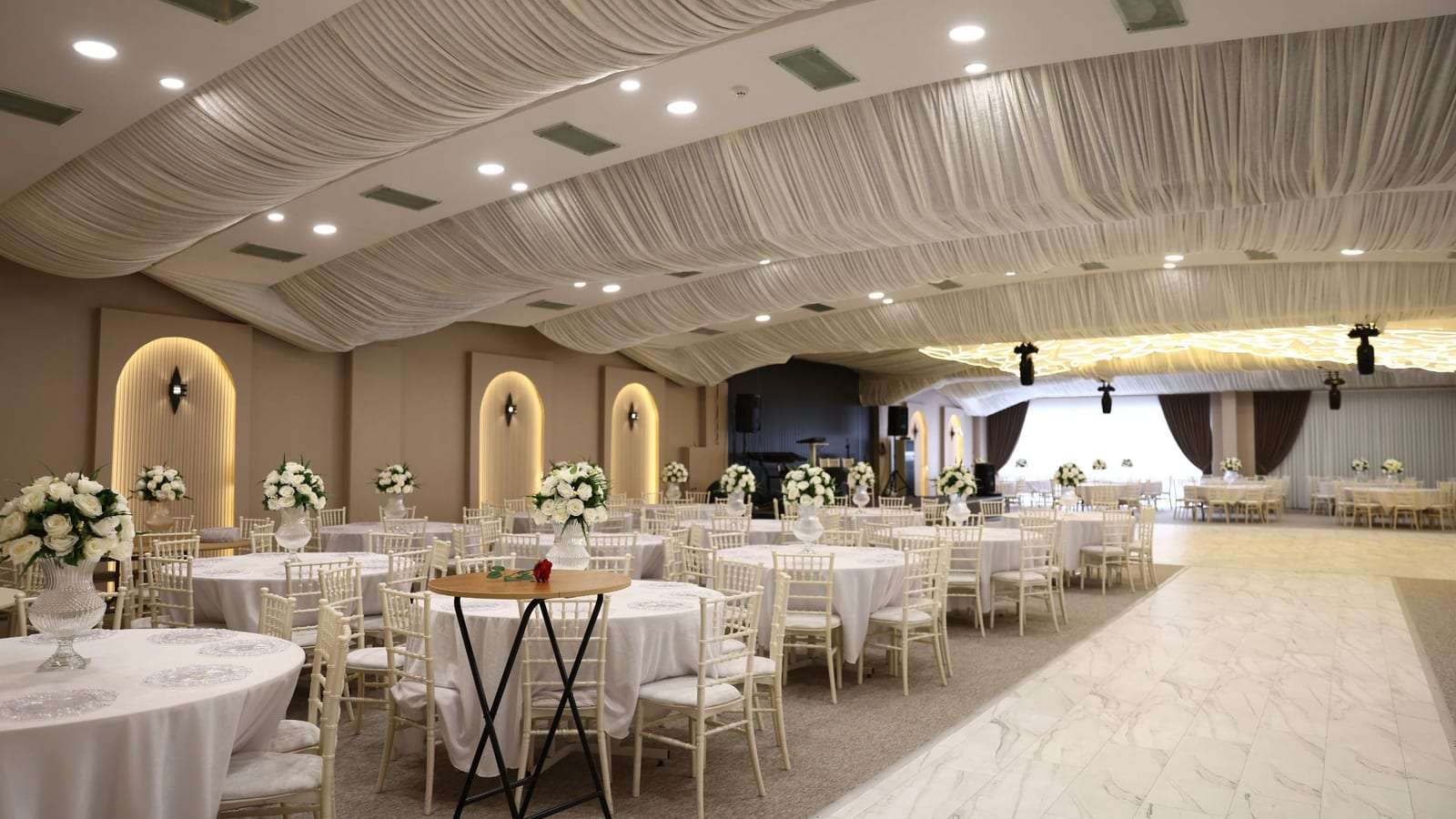
I ask every bride three questions before we talk about any design. The first is about the size of the hall and the height of its ceiling, because a huge kosha under a low ceiling looks squashed, while a small one in a vast hall gets lost. The second is about the feel she imagines for the night. Classic and grand, modern and calm, or traditional with Arabian touches?
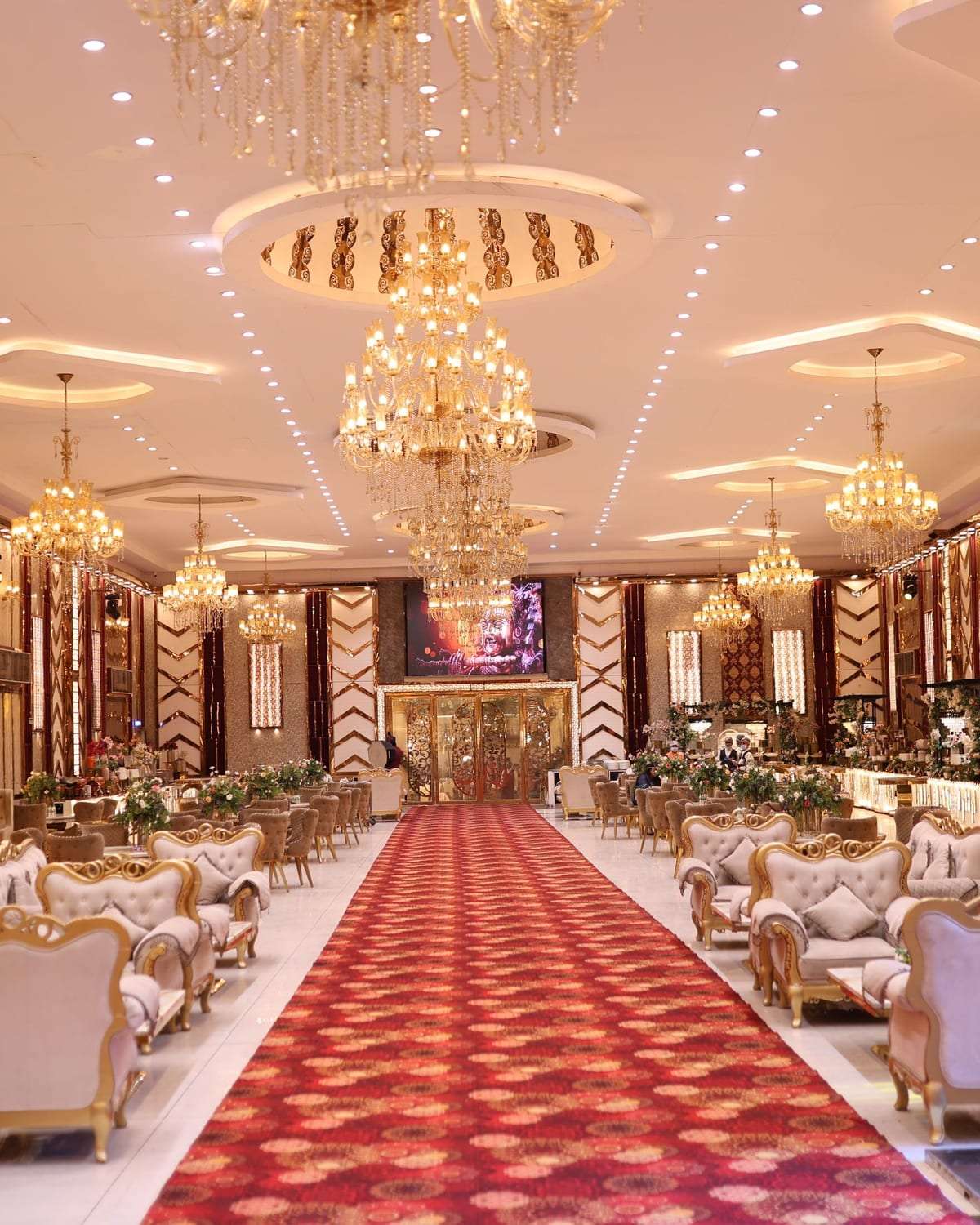
The third question is about the colours of the hall itself, from the carpet to the walls and chandeliers. A kosha looks best when it is in harmony with the room rather than fighting it, and draping fabric over the hall’s décor is possible but costs money that could have gone on flowers or lighting. If you have not booked the hall yet, read our guide to choosing a wedding hall first.
Classic luxury
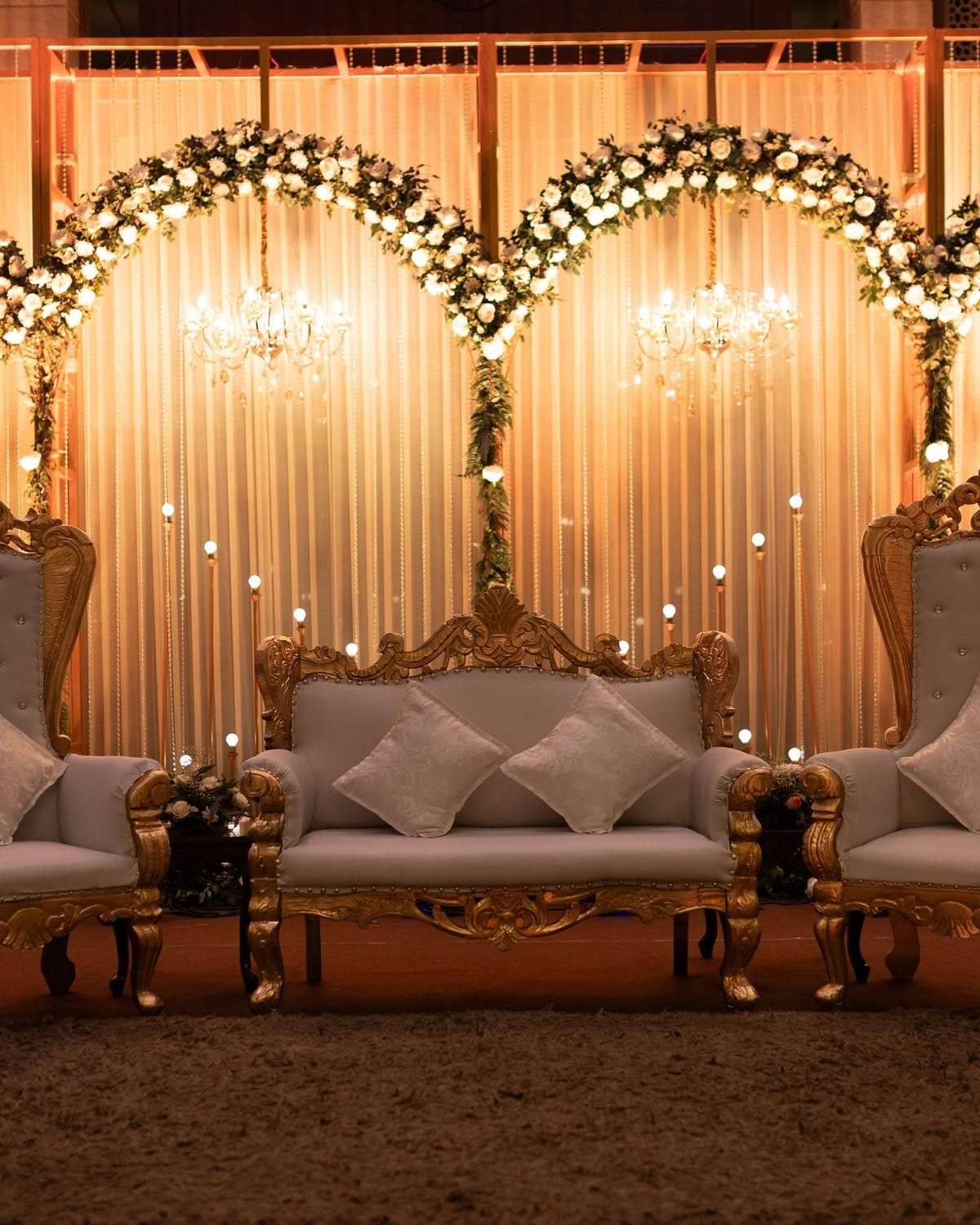
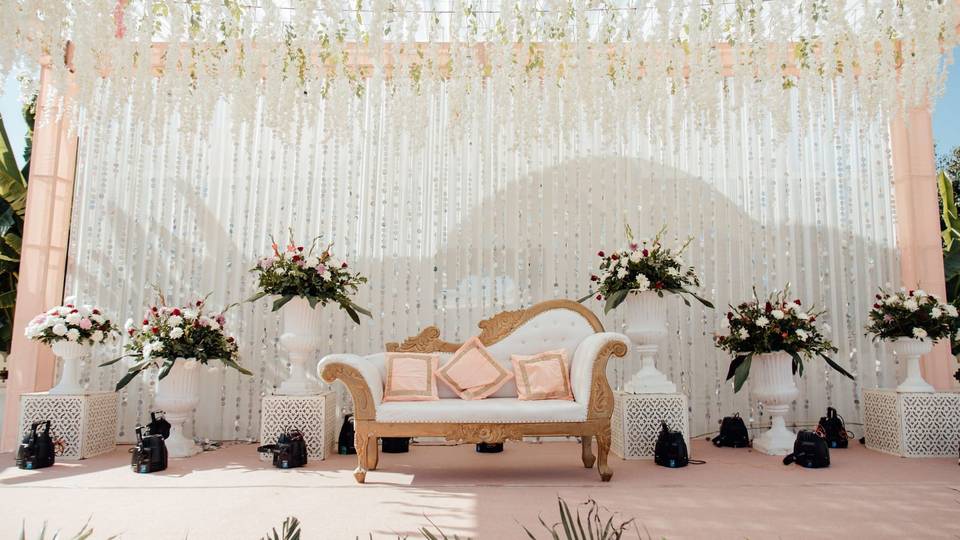
A gilded or champagne-coloured sofa, drapes falling from the ceiling, crystal chandeliers and dense flowers in white and pale pink. This is the style many people picture when they hear the word kosha. It suits wedding palaces and large halls with high ceilings, and in photos it gives an unmistakably regal feel.
Its secret, though, is balance. Luxury does not mean piling on elements, and many classic koshas fail because every piece competes with the next. Choose one focal piece, such as the sofa or the arch behind it, and let everything else serve it and lead the eye towards it.
Modern and minimal
Clean lines, calm colours such as white, beige and olive green, and fewer flowers placed with care. Brides who prefer quiet elegance to sparkle love this style, and it suits modern halls and hotel ballrooms with neutral décor.
In a minimal kosha, lighting is the star. Warm light spread over several levels makes a design of three elements look refined in photos, while flat, harsh light makes the same design look bare. If you go this way, spend on lighting what you saved on flowers.
Arabian and heritage style
Arches inspired by traditional architecture, geometric patterns, brass lanterns and fabrics in warm tones such as burgundy and gold. You can draw on the character of each region to give the wedding a clear local identity, like the carved wooden roshan screens that recall the old houses of Jeddah, or the mud-brick lines and triangular motifs of Najdi architecture.
Grandmothers and mothers tend to love this style, and it comes out in photos looking unlike anyone else’s wedding. The key is to use considered touches rather than stage scenery. One beautiful lantern says more than twenty crowded together.
Flower walls and outdoor settings
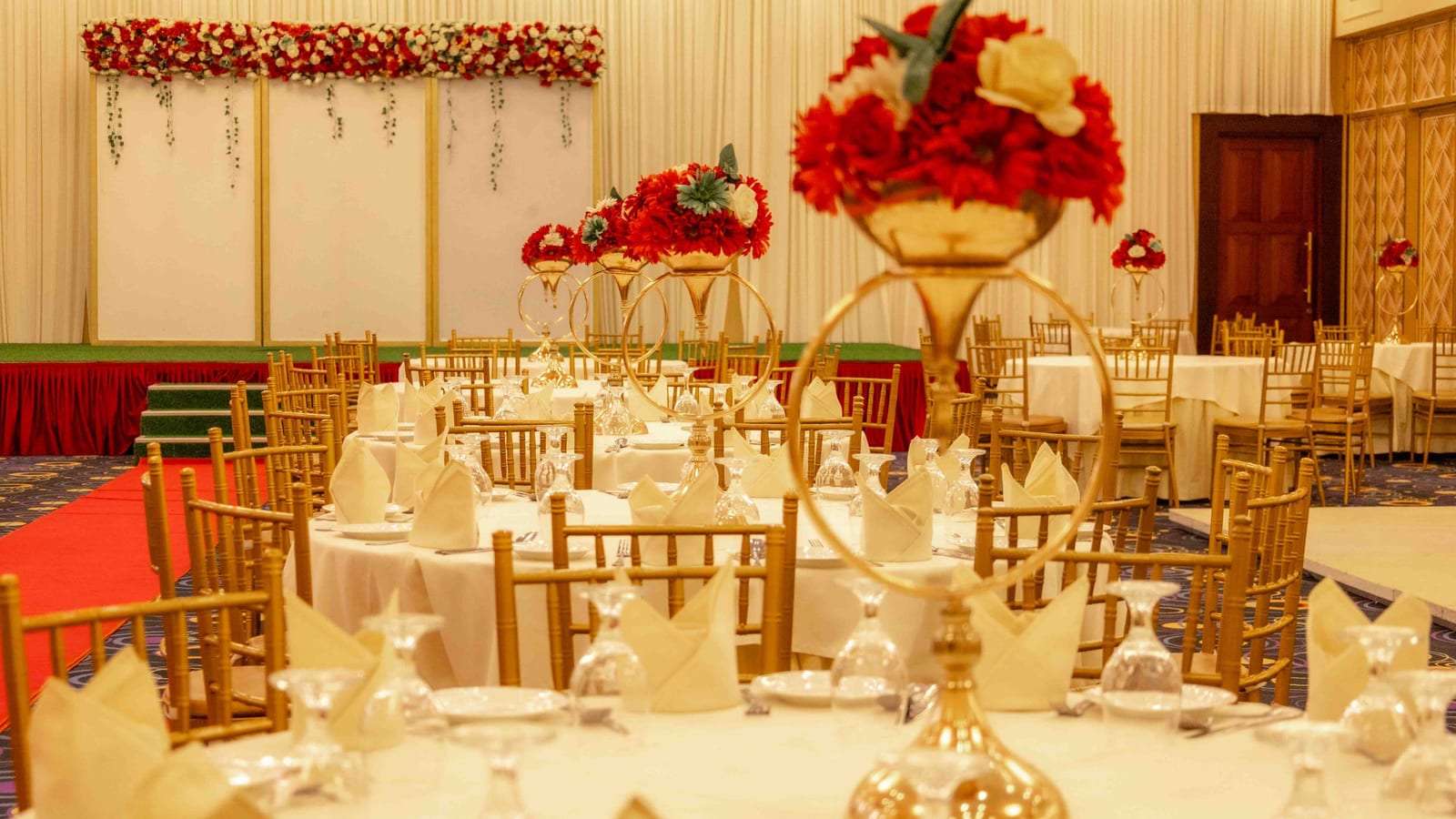
A backdrop made entirely of flowers is one of the most striking ideas, but it needs early planning to secure the quantities, especially when the flowers are fresh and seasonal, and it usually costs more than other styles. The solution I often use is to combine fresh flowers in the front row, which is seen up close, with high-quality artificial ones behind. The look stays the same and the cost comes down.
In rest houses, gardens and resorts the rules change. Early-evening daylight is lovely but fades quickly, and the wind shows no mercy to light fabrics. These settings suit light wooden or metal arches, well-anchored draped fabric and strings of warm lights, with a backup plan if the weather turns.
Milka and henna-night settings
The milka and the engagement have a calmer, much smaller feel. An elegant seating area at home or in a small hall, with a sofa or two chairs, a simple backdrop of flowers or fabric and soft lighting. The idea here is warmth and privacy rather than scale, and a few well-chosen touches are enough to create a lovely atmosphere. These occasions are covered in our engagement and milka guide.
The henna night has its own colours in many homes, such as green, gold and burgundy, with floor seating, cushions, embroidered throws and decorated henna trays. Many families like it to feel more traditional and intimate than the wedding night, almost as the family’s private celebration before the big night.
When the groom comes in
At some weddings the groom enters the women’s section at a set time to be photographed with the bride, and in other families that never happens. If it is part of your programme, tell the designer from the start. The kosha will then need a sofa wide enough for two and comfortable space around it, and the timing of that moment needs arranging in advance with the photographer and with whoever prepares the section for his entrance.
Colour
Colour causes more debate in kosha meetings than anything else. These are the rules I come back to every time.
- One main colour and one supporting colour, with a third for small accents only.
- White with gold or champagne never dates and suits most halls.
- Strong colours need balanced lighting so they do not change skin tones in photos.
- Start from the dress, so the bride does not disappear into her backdrop.
It also helps to carry the same colours into the invitations and the tables, so the wedding has one look from the card to the last photo.
Lighting and photography
Lighting often matters more than the number of flowers. Warm light under and behind the kosha, and more directed along the aisle, makes the scene magical in photos and video. Yet a kosha that looks stunning in person can disappoint in photos if it was not planned with the photographer. Very glossy backdrops reflect the flash, strong coloured light turns skin green or purple, and too many elements pull the eye away from the bride.
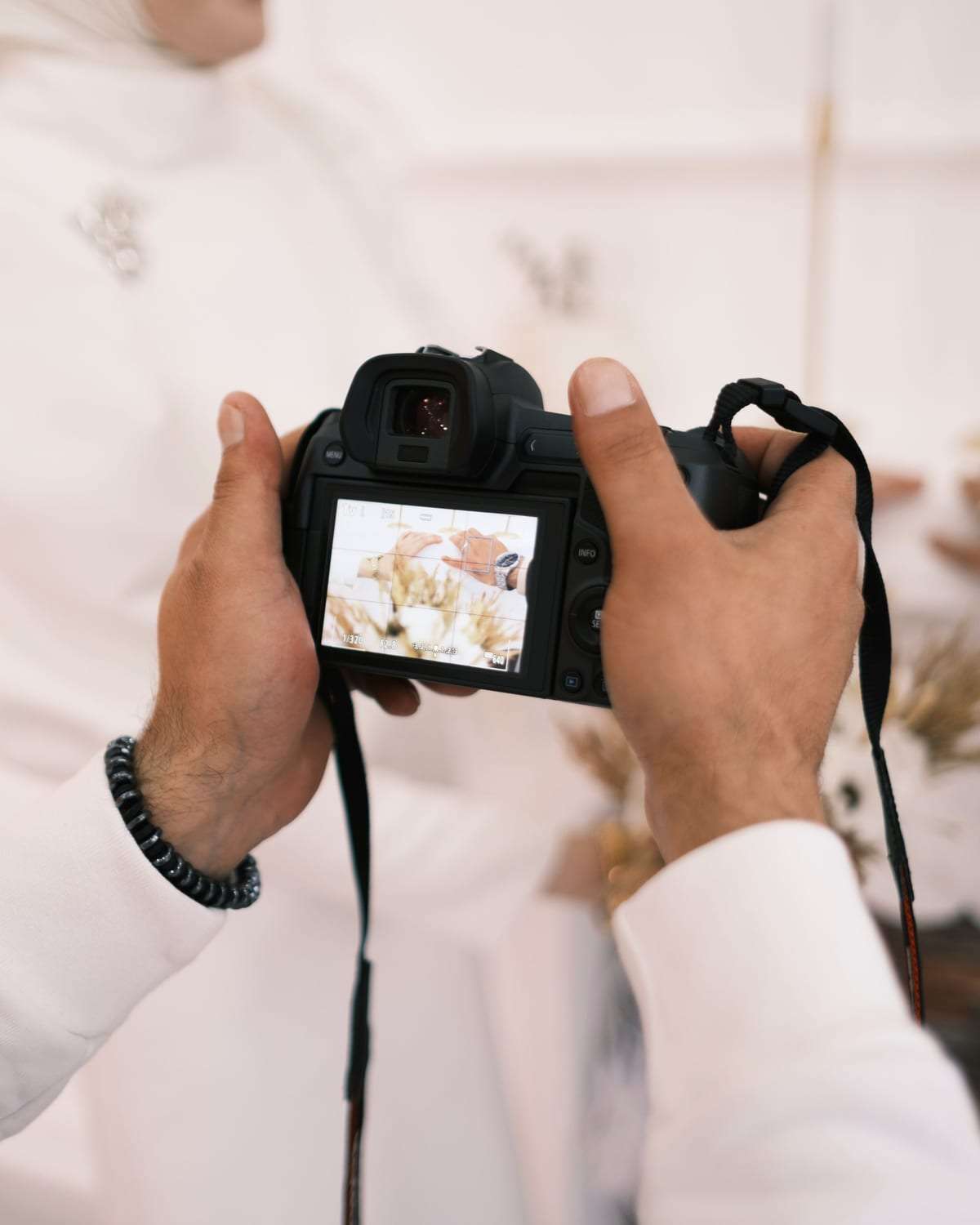
That is why I put the designer and the photographer on one call a few weeks before the wedding. They agree on the main camera angle, where the photographer will stand, how bright the light should be so it is not in the bride’s eyes, and a few minutes to photograph the kosha before guests arrive, when it looks its best.
The zaffa aisle
The aisle is part of the kosha even though many people forget it. It is the path the bride walks in on and where the first zaffa photos are taken. You can line it with flowers, candles in glass lanterns or a series of arches that give depth to the picture. More important than the decoration is that it is safe and wide enough for the train of the dress, with no unexpected steps hidden in dim light.
Working with the hall
Before agreeing with any designer, ask the hall whether it allows an outside kosha and on what terms, since some halls insist on their own designer or charge a fee. Agree the set-up time in writing, because in the season some halls allow only a few hours when they have another wedding the night before.
Ask the designer for a first concept before the final agreement, and ask whether someone from the team stays during the wedding to deal with any problem, such as a fallen flower or a light that goes out. On our kosha and decoration page you will find what an offer usually includes and what affects the cost.
Mistakes I see often
The most frequent is a design bigger than the hall or taller than its ceiling, followed by relying on flowers alone with weak lighting. Now and then I see colours so close to the dress that the bride fades into the background, unsafe steps, or a sofa that looks beautiful but is not comfortable for four hours of sitting. All of these can be avoided with a single visit to the hall with the designer before the design is approved.
Gathering ideas, and after the wedding
Save the photos you like in one folder, then look at them together and search for what they have in common. Is it the colour, the lighting or the shape of the arch? That alone gets the designer halfway to understanding your taste. Do not try to copy one particular photo exactly. Every hall differs in size and light, and what worked there may not work for you.
Ask the designer what happens to the fresh flowers after the wedding. Some families keep a few, share them among female relatives or reuse them for a small gathering the next day. It is a simple gesture that makes the joy of the night last a little longer.
FAQ
Which kosha colours are most popular?
Trends shift every season, but white, gold, champagne and soft tones remain constant choices because they suit most halls and look beautiful in photos.
Is a bigger kosha always more beautiful?
No. The most beautiful kosha is the one that fits the size of the hall and the height of its ceiling, and a balanced design with good lighting usually beats sheer size.
When should I book the kosha designer?
Right after the hall is confirmed, because the design depends on its space, ceiling and rules. Booking earlier can mean starting the design again from scratch.
Can we have an elegant kosha on a limited budget?
Yes, by focusing on one focal piece, good lighting and calm colours, and by combining fresh flowers at the front with artificial ones behind.
Do I need a kosha in the men’s section?
The kosha is usually in the women’s section, and the men’s section is often styled only at the entrance and seating areas. In the end it is the family’s choice.
Can the same kosha be used for the milka and the wedding?
The space and feel of the two occasions usually differ, but you can agree with the same designer on two matching designs that reuse some pieces.