Start with the guest count, not the photos
Most people begin by scrolling through photos of halls on social media, and in my view it is the worst place to start. Those photos are taken with a wide lens from the most flattering corner, and they tell you nothing about how many of your guests will actually fit. Start by estimating the number of guests in each section separately. That single number rules out half the options before you open a single picture.
A small hall with a large guest list means queues at the buffet and guests left standing, an awkward scene nobody forgets. A huge hall with a small guest list looks empty in the photos and makes you pay for space you do not need. Look for a hall that holds your numbers comfortably, with a little room for the guests who turn up without confirming. Our guide to estimating the guest count will help you arrive at a realistic figure.
The women’s and men’s sections
Most wedding halls in the Kingdom are designed with two separate sections, but the details vary a great deal, and they are what make the difference on the night. Check the capacity of each section first. Some halls have a spacious women’s section and a small men’s one, others the reverse, and the total capacity means little if one side cannot seat its guests.
Then look at the entrances. A separate entrance for each section protects privacy and eases the crush on arrival, something female guests appreciate a lot. Ask about the bride’s room too. Is it close to the women’s section and comfortable enough for hours of getting ready and waiting, with a large mirror, good light and its own bathroom?
One detail many people overlook is the zaffa route, the path the bride walks from the door of the section to the kosha. A clear, wide route gives a beautiful entrance and better photos, while a winding path between tables unsettles both the bride and the photographer. Finally, make sure there are female supervisors and hostesses in the women’s section, and that the photographer can move around and work without obstacles.
Hall, palace, hotel or rest house?
The traditional wedding hall is the most common choice. It comes in many sizes with two sections ready to go, and suits most medium and large weddings. Wedding palaces usually offer more space, more grandeur and broader services, and suit very large celebrations or families who want an unmistakably festive feel.
A hotel ballroom is a different proposition, with hotel-style organisation, full hospitality and rooms nearby for guests travelling from other cities. It suits elegant, medium-sized weddings. Many hotels can provide two halls or two separate sections, but check that the entrances really are independent before you book. The rest house, or istiraha, remains the closest to a family atmosphere, with more flexibility in how you set it up, and works very well for a milka, a henna night or a small celebration.
No option is best for everyone. The right one is whichever fits your guest count, your budget and the kind of night you have in mind. You can browse wedding halls in your city to see what is available.
Location, parking and the drive
Think about where most of your guests live and how long the drive takes at the time of the wedding, not at midday. A hall close to the main roads is easier for everyone, and especially for older relatives. I recommend driving the route yourselves on a similar day and at a similar hour, because traffic on a weekend night looks nothing like what you see on a morning visit.
Parking never appears in the photos, yet it is the first thing guests notice. Ask how many spaces there are, whether they will cover the expected numbers and whether there is valet parking. If guests are coming from out of town, hotels nearby make their stay and their journey easier and reduce the number who decline.
What exactly does the package include?
This is where halls differ most, which is why comparing prices seems impossible until you understand what is inside each one. Some halls rent out the space only. Others offer a package with dinner, coffee, dates and sweets, and some add a basic kosha, lighting, sound and screens. Ask about each item by name rather than settling for the words “all-inclusive package”.
Ask as well how many hours the booking covers and what extra time costs, and if you may bring in outside catering, a kosha designer or a wedding planner. Some halls insist you use their own suppliers and some charge a fee for outside vendors, which changes the whole comparison. Have all of it written into the offer, then compare offers line by line.
Style, ceiling and lighting
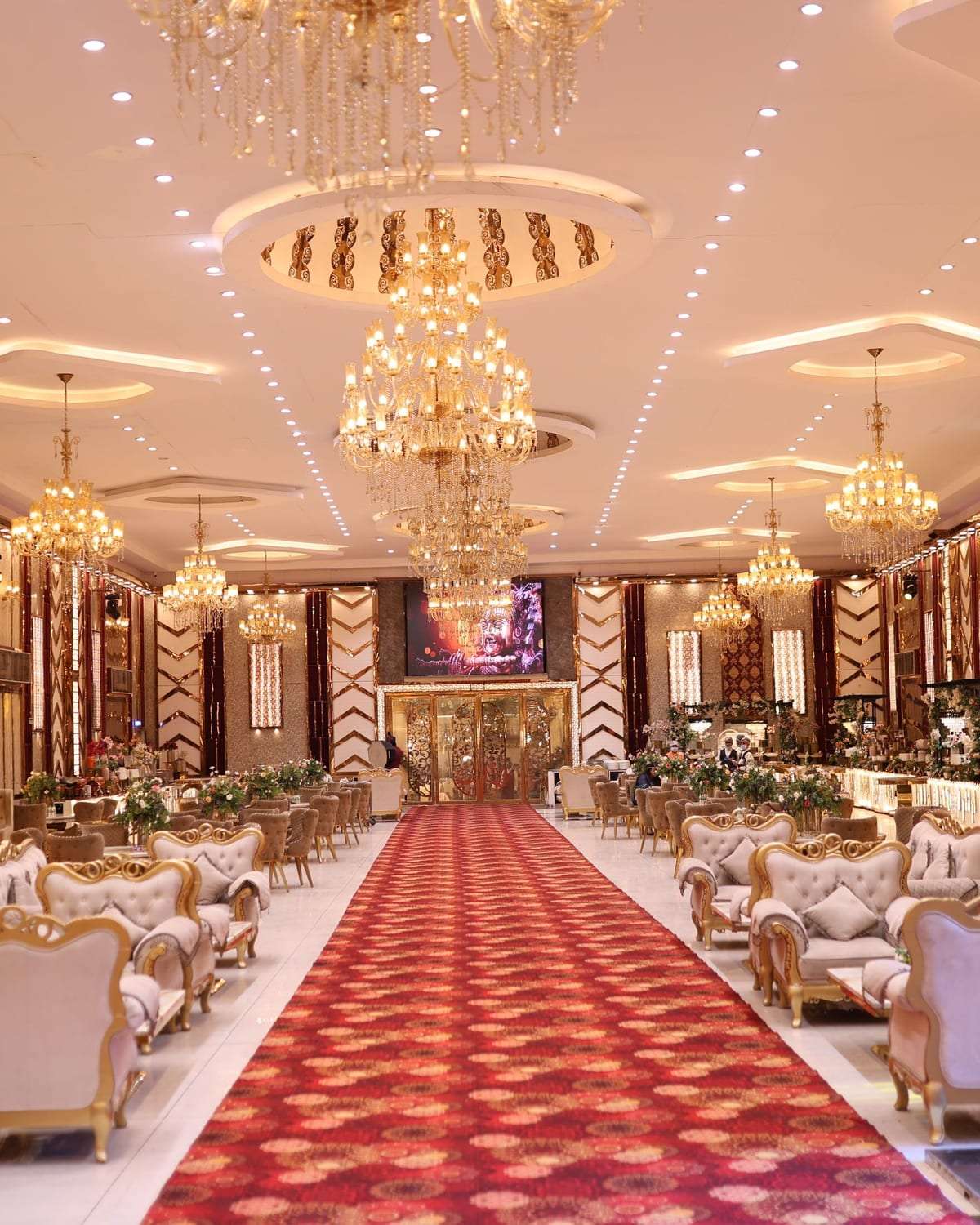
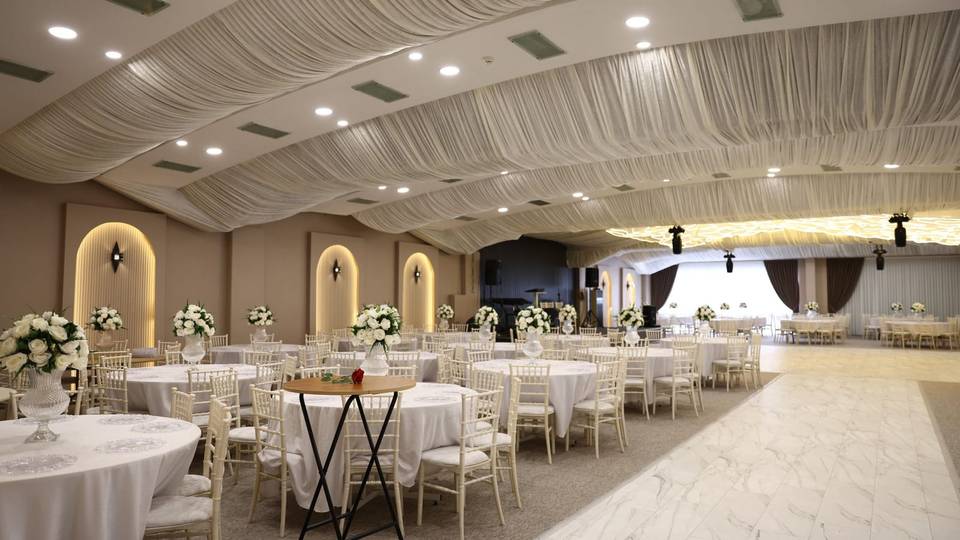
Once the basics are settled, style comes in. A classic hall with gold chandeliers and patterned carpets is a world away from a modern one with clean lines and soft colours. Choose a hall whose design sits well with the kosha and colours you love, so you are not paying extra to cover up its décor.
Pay attention to the ceiling height, since a tall kosha needs a ceiling that allows it, and to the lighting, which affects both how the kosha looks and the quality of the photos. Dim yellow light creates atmosphere but makes the photographer’s job harder, so ask whether it can be adjusted during the zaffa.
Summer weddings and house rules
If your wedding falls in the hot months, check that the cooling copes in both sections when they are full, not just when they are empty during your visit. Ask about shaded entrances or entrances close to the car park, because older guests and children feel the heat on arrival and departure, and ask what the hall does if the power fails or the cooling breaks down.
Every hall has its own rules about sound, performances, live bands, effects, photography and finishing times. Ask about them on the first visit, especially if you plan particular segments such as an ardah or a live zaffa, so you do not discover the restrictions after paying the deposit.
The questions I take on every visit
Visit the hall before you book, ideally at a similar time of day to your wedding. These are the questions I never leave without an answer to.
- Can we see the hall set up for another wedding before we decide?
- Where will the kosha stand, and where does the bride enter?
- Where are coffee and dinner served in each section?
- What condition are the bathrooms and the bride’s room in?
- Who is in charge on the night, and how do we reach them directly?
The last question sounds trivial but saves a great deal. With the number of a named person at the hall, a small problem on the night is fixed in a minute instead of half an hour.
The contract, and when to book
Read the contract calmly before you sign. Look at the deposit and when the remaining payments are due, the terms for cancelling or changing the date and what is refunded in each case, any minimum guest count, who is liable for damage, and the date by which you must confirm final numbers for the catering. Do not sign anything unclear, and keep a copy of the contract and of every receipt.
Book the hall as soon as you have a rough date, a budget and a guest count, since it is usually the first thing booked. In the wedding season and on weekend nights, the well-known halls go early, so do not sit on the decision once you have found the right place. If your date is flexible, say so plainly. You may be offered a midweek night on better terms.
Warning signs
A serious hall welcomes your questions and puts its terms in writing without hesitation. If a hall refuses to give you a written offer, pushes you to pay the deposit on the first visit, gives vague answers about real capacity or what the package covers, or will not let you see it set up, take your time and compare it with others. Losing a date is easier to live with than a contract you regret.
How to compare the offers
Put the offers in one table, with a row for capacity per section, what the package covers, location, house rules, and payment and cancellation terms. You will quickly see that the cheapest offer is not always the best value if it leaves out the catering or the kosha. To save yourself the phone calls, you can request hall offers from halls in your city with a single request and compare them in that same table.
FAQ
Is an all-inclusive package better than renting the space only?
An all-inclusive package is easier to coordinate because one party handles most of the details, while renting the space alone leaves you free to choose the catering and kosha yourselves. Decide based on your time and how much control you want, and work out the full cost in both cases before comparing.
How many halls should we visit before booking?
Three is usually enough, provided you have filtered the options by phone first on capacity, location and package. More visits than that tend to cloud the decision rather than help it.
Should we pay the deposit on the first visit?
There is no need to rush unless you are completely sure and the date is in high demand. Ask for the offer in writing, compare it with at least two others, then pay the deposit against a clear contract and a receipt.
Can we change the date after booking?
That depends on the contract, and halls differ a lot here. Ask before you sign and have the condition written down clearly, including how much notice you must give.
Does a hotel ballroom work for a two-section wedding?
Many hotels can provide two halls or two separate sections. Check the independent entrances, the privacy and the bride’s room before booking, and see wedding halls to compare.