The female photographer comes first
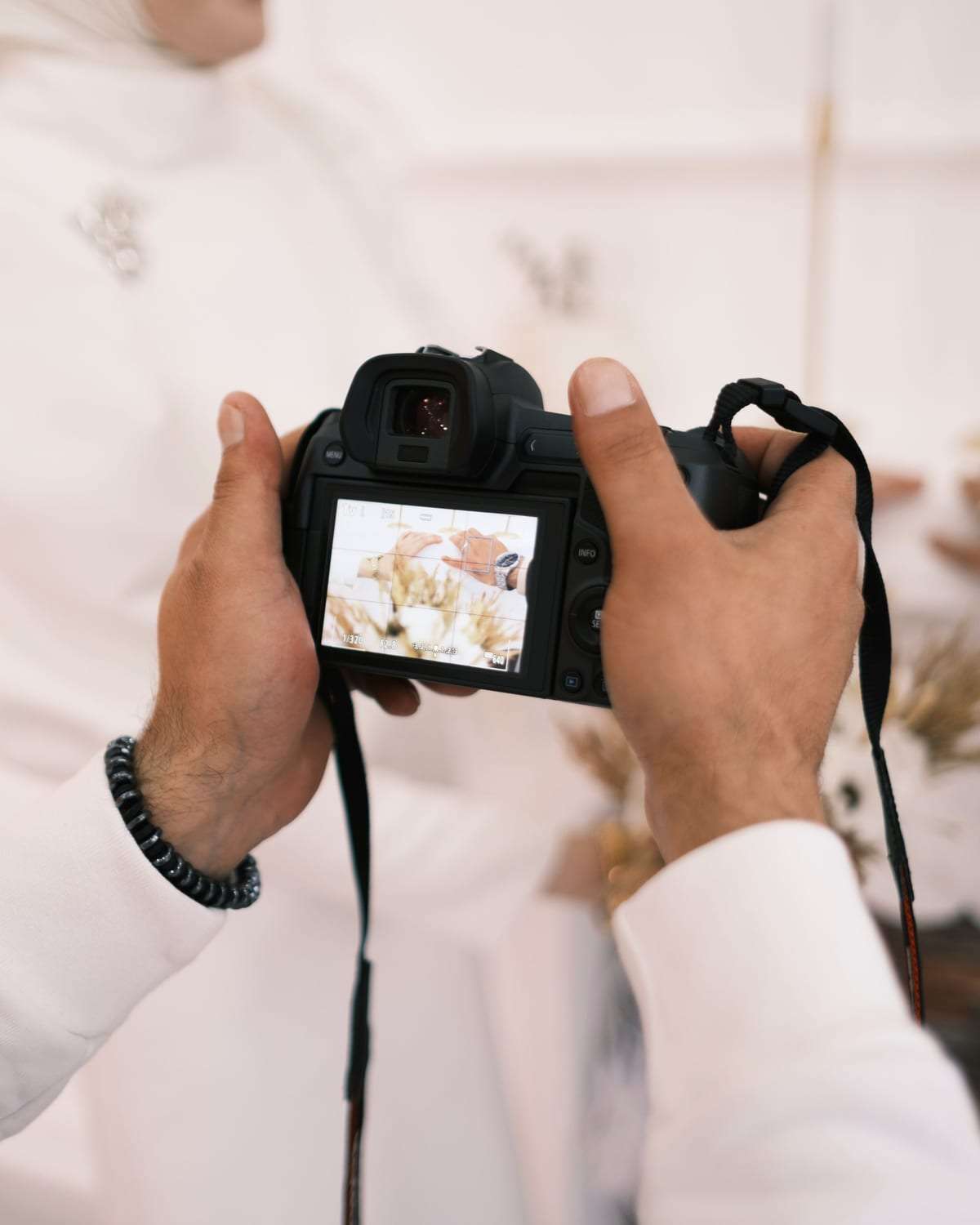
At most Saudi weddings the women’s section is the heart of the photography. That is where the kosha is, where the bride makes her entrance, and where her mother, sisters, grandmothers and aunts are dressed at their finest. So choosing the photography usually starts with finding a female photographer who specialises in weddings, with an assistant or a female team if the wedding is large.
The men’s section needs a photographer to cover the welcome, the groom’s arrival and segments such as the ardah. They may come from the same studio or from two different ones. What matters is that each knows the other’s timings, especially if the groom will enter the women’s section at a set moment. Our wedding photography page shows what offers usually include.
Which style feels like you?
Photographers work in different styles, and none is better than another. A documentary style captures moments as they happened with little direction, so you see the real laughter and the lovely nerves before the zaffa. A classic style relies on considered poses for the bride and family and suits the traditional albums mothers love. An artistic style stands out for its colour grading, inventive angles and almost cinematic light.
My advice is to choose a photographer whose natural style matches your taste, rather than asking a classic photographer to turn artistic for one night. What she shows on her account is, in most cases, what you will get, so study it properly.
How to read past work
The first thing I ask any photographer for is a complete album from a single wedding, not a selection of the best twenty photos of her career. A full album shows whether the quality holds from the start of the night to the end, and above all how she handles low light during the zaffa, when the main lights go down and only coloured lighting is left.
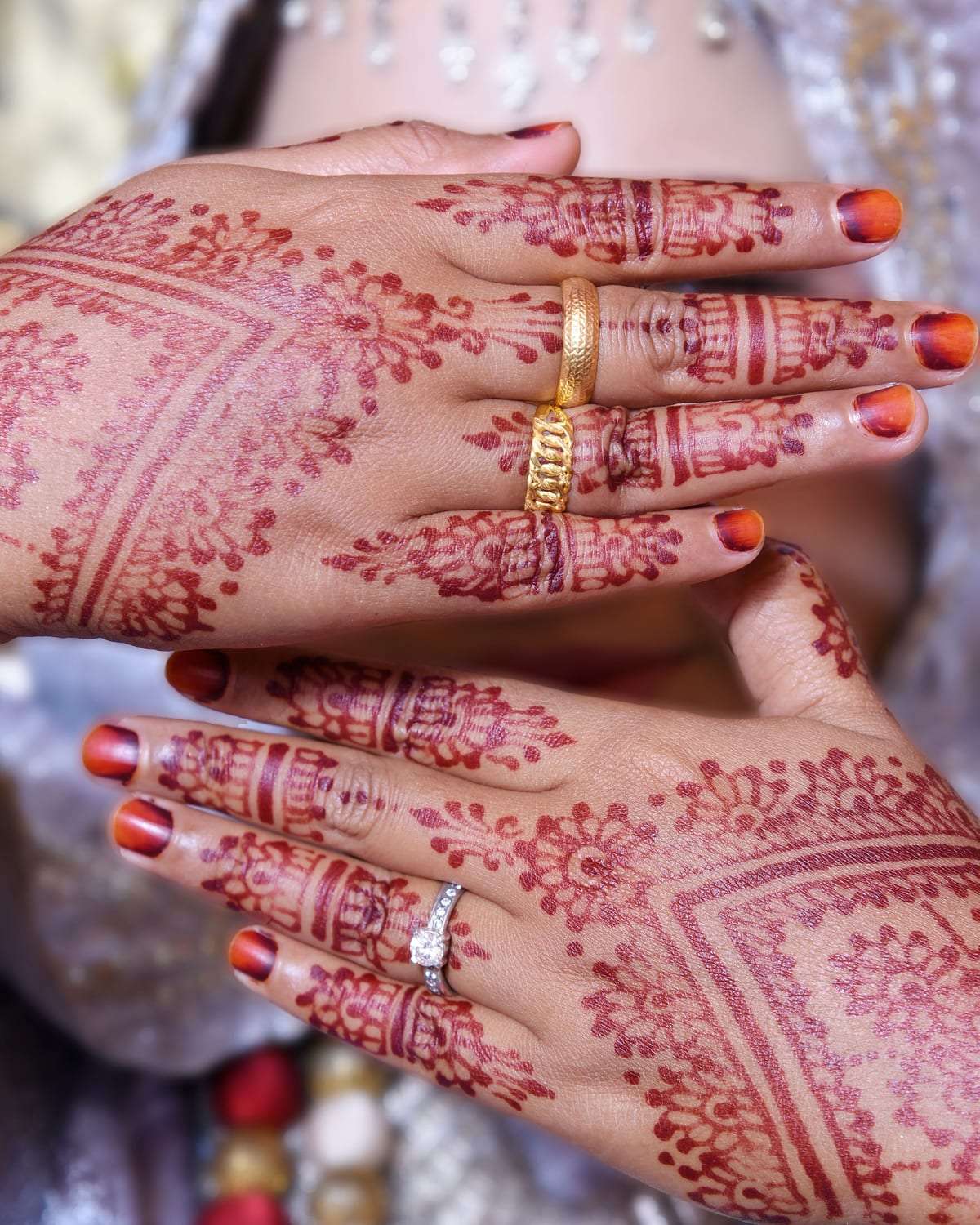
Look at the skin tones. Are they natural, or tinted orange or grey? Look at the detail of the dress and embroidery. Is it crisp or lost? Search for photos from halls similar to yours in size and lighting, and notice whether the photographer pays attention to small things such as the shabka, the invitation card and the henna tray.
Do not worry if the work on show has no faces. Many photographers present their portfolio that way out of respect for families’ privacy, and to me it is a good sign that they will respect yours too.
Privacy is written, not assumed
Agree in writing that no photo from the wedding will be posted on the photographer’s accounts or anywhere else without your written permission. Do not settle for a verbal promise, however trustworthy she seems. A written clause protects both sides. Ask how the photos will be delivered, whether through a password-protected link or on a storage device, and who keeps copies after delivery and for how long.
Ask about the team as well. Who exactly will attend, is everyone entering the women’s section a woman, and how are the files stored on their devices after the wedding? A professional photographer answers these questions without taking offence, and often raises them before you do.
Feeling at ease matters as much as skill
The photographer will be close to the bride in her most private and nervous moments, from the dressing room to the kosha. So how comfortable the bride feels with her matters as much as her skill with a camera. Ask for a call or a meeting before booking, and notice how calm she is, how clear her answers are, and whether she listens to what you want or mostly talks about herself. A bride at ease looks more beautiful in photos than any lighting can make her.
Video and a private session
You can stay with photos only, add a short highlights film, or have a full video of the evening. The short film is popular because it is easy to share with family far away, while a full video is a complete record your children may return to one day. Decide what you want before requesting offers, because it changes the size of the team and the cost considerably.
Some brides also choose a private photo session before or after the wedding, somewhere quiet with lovely natural light, away from the bustle of the night. It gives you calm photos without time pressure, but agree on the location, its privacy and the timing in advance.
Lighting, the hidden challenge
Many of the most important moments of a wedding happen in difficult light. Strong coloured lights above the kosha, near-darkness during the zaffa, chandeliers bouncing the flash in every direction. An experienced photographer knows how to deal with all of this using suitable lighting gear and careful settings, without bothering guests with repeated flashes in their faces.
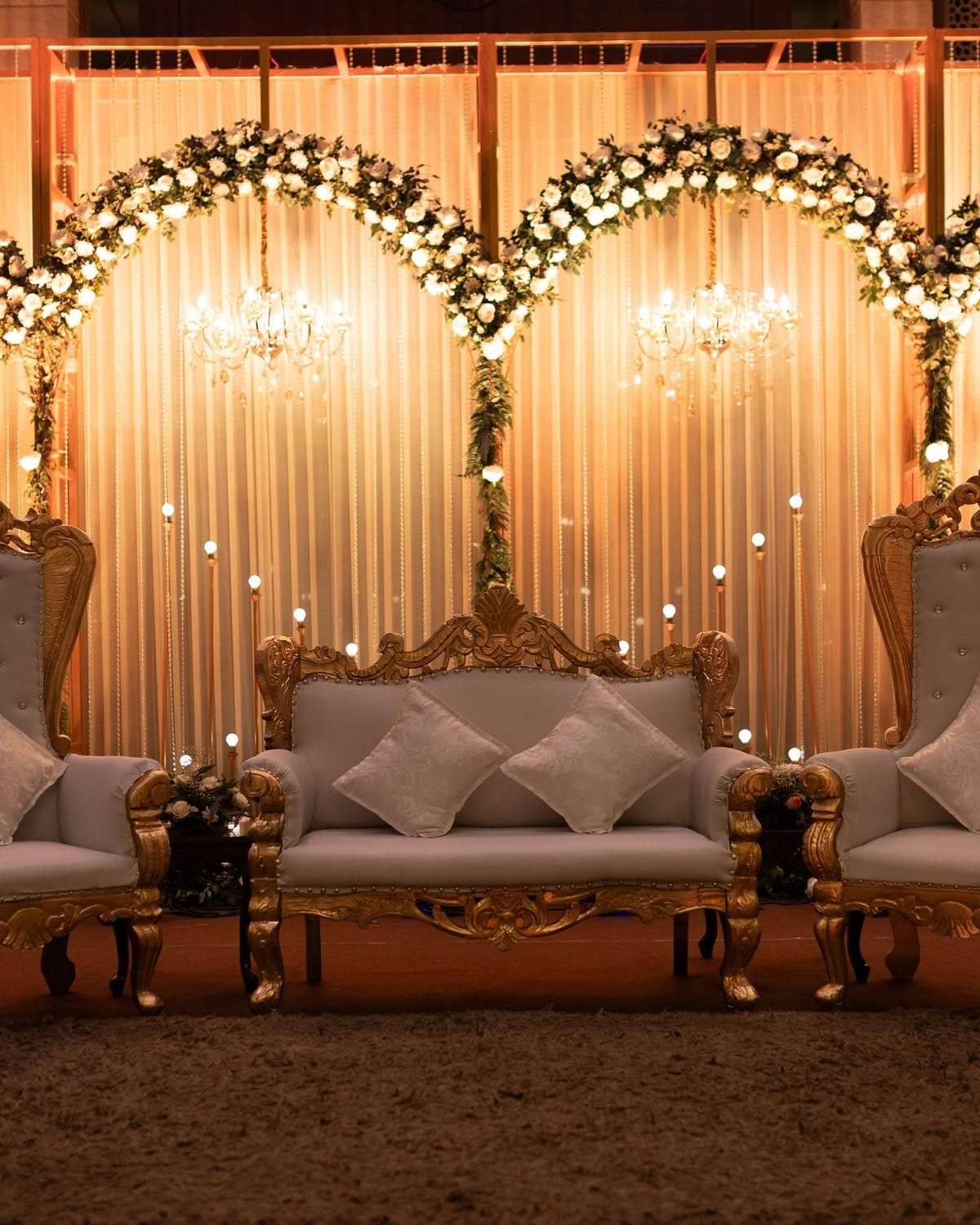
Ask about her experience in halls like yours, and ask specifically to see photos from zaffa moments, since they are the hardest to shoot and the ones that matter most. If you can, bring her together with the kosha designer before the wedding to agree on light levels, where she will stand and a few minutes to photograph the kosha before guests come in.
What you receive, and when
These are the points I ask to see written clearly into the offer, because they cause most of the disagreements after a wedding.
- The approximate number of edited photos.
- Whether unedited photos are delivered too.
- The printed album, if any, with its size and page count.
- When a first selection arrives, and when full delivery is due.
- The file format and resolution.
The shot list
A few days before the wedding I sit down with the bride to write the list of shots that must not be missed. Her with her mother, with her sisters, with her grandmother, the moment the shabka is presented, the details of the dress and the henna. That list goes to the photographer together with the name of a female relative who will stay beside her on the night and introduce the aunts, because the photographer has no way of knowing which grandmother travelled from another city especially for the evening.
Budget and warning signs
The cost of photography depends on the number of photographers, whether video is added, the hours of coverage and the albums. Because the photos are what lasts, many families give photography a significant share of the budget. If the budget is limited, my priority is a skilled photographer in the women’s section with a short film, rather than a large team of average quality. There is more in our wedding cost factors guide.
Watch for warning signs. A photographer who will not show a full album, who avoids putting the privacy terms in the contract, who will not commit to a delivery time or a number of photos, or who covers several weddings on the same night without enough staff. In that last case, ask directly who will be at your wedding.
Questions before booking
Before any deposit I ask five questions. Is there a female photographer and an all-female team for the women’s section? How many weddings does she cover on the same night? What exactly does the offer include, and what are the extras? What are the terms for the deposit, cancellation and changing the date? And what happens if she cannot attend because of an emergency, does she have a replacement of the same standard? That last question makes some photographers uncomfortable, but a clear answer to it is a mark of professionalism.
After the wedding, keep the photos safe
When the photos arrive, save at least two copies in two different places, such as an external drive and a private cloud account, and do not rely on the delivery link because it may expire. Choose together as a family what to print or share, respecting the wishes of relatives who prefer their photos not to circulate.
When to book
Photographers who specialise in weddings are booked early in the season, so book as soon as the hall and the date are confirmed. If you have other occasions such as a milka or a henna night, ask about a package covering them with the same photographer, so the style of the photos is consistent across every occasion.
You can request photography offers with a single request, and photographers in your city will contact you with their offers and examples of their work.
FAQ
Do I need two photographers in the women’s section?
At large weddings it can help, so the zaffa, the guests and the details are covered at the same time. A medium-sized wedding is usually well served by one skilled photographer.
Can the wedding be photographed without showing guests’ faces?
Yes. You can agree that the focus stays on the bride, the close family and the details, and that guests are only photographed with their permission. Many photographers work this way already.
Can the milka and henna night be photographed along with the wedding?
Yes, and many photographers offer packages covering more than one occasion. It is a practical choice that keeps the style consistent, and it can cost less than booking each occasion separately.
Should I choose a photographer from my own city?
A photographer from your own city is usually easier because she knows the halls and coordination is simpler. If you love the style of someone from another city, that is fine too, as long as travel and accommodation costs are agreed in advance.
When will I receive the photos?
It varies between photographers. Ask, and have it written into the contract, together with the date of a first selection you can share with the family a few days after the wedding.
How can I be sure of a photographer’s quality?
Ask for a full album from a past wedding, compare several photographers, and read the contract before paying. You can also see our wedding photography page.